
The Technical Architecture: Inside AI Datacenters – Racks, Accelerators, Memory, and Networking
Introduction: Engineering the AI Factory
-
- Rack-Level Design: Power densities from 40 kW to 250 kW, liquid cooling imperatives, and training vs. inference configurations
- Accelerator Wars: Detailed comparison of NVIDIA H200/B200, AMD MI300X/MI450, Intel Gaudi, Cerebras WSE, Groq TSP, and AWS Trainium/Inferentia
- Memory Hierarchies: HBM4, LPDDR5, SOCAMM2—when to use each and why memory power is becoming a first-order constraint
- Networking Fabric: InfiniBand vs. Spectrum-X Ethernet, 51.2T vs. 102.4T switches, and the Ultra Ethernet Consortium’s impact
- Power & Cooling: Direct-to-chip liquid cooling, immersion cooling, power capacitance shelves, and waste heat recovery
Part 1: Rack-Level Architecture Design
The Power Density Revolution
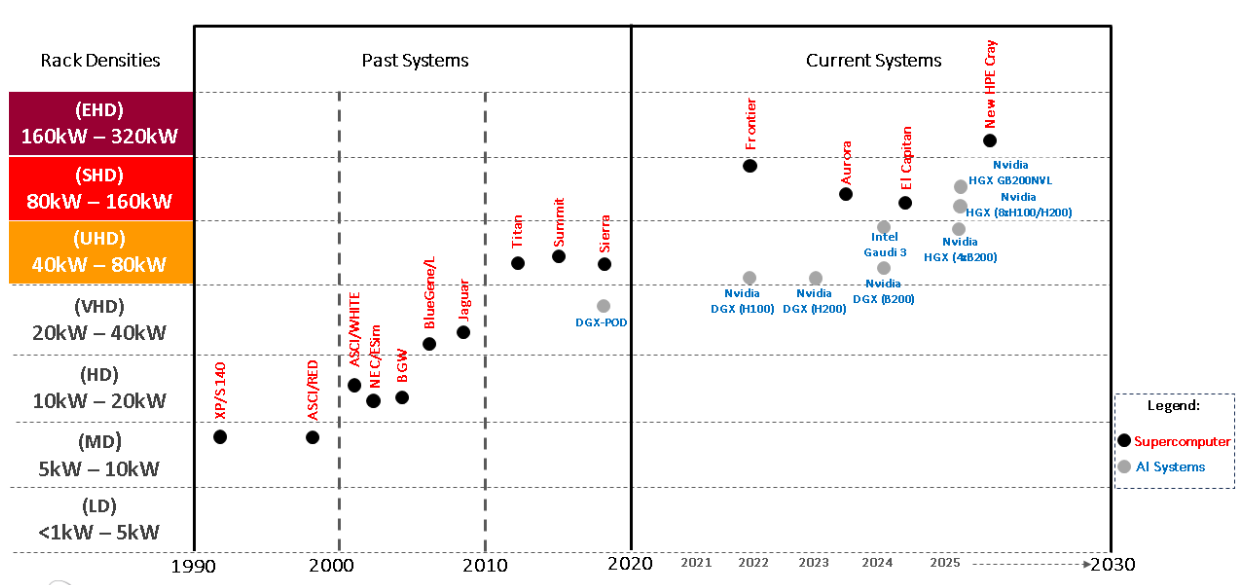
Rack Density Evolution by Generation:
|
Generation
|
Typical Density
|
Cooling Method
|
Example System
|
|---|---|---|---|
|
Legacy (2020-2022)
|
10-20 kW/rack
|
Air cooling
|
NVIDIA DGX A100 (partial air)
|
|
Current (2023-2025)
|
40-80 kW/rack
|
Direct-to-chip liquid
|
NVIDIA HGX H100 8-GPU
|
|
Next-Gen (2025-2027)
|
80-120 kW/rack
|
Advanced D2C + rear-door
|
NVIDIA GB200 NVL72
|
|
Future (2028-2030)
|
150-250 kW/rack
|
Two-phase immersion
|
Next-gen Blackwell/Rubin
|
AI Practitioner’s View:
Design for the next-next generation, not the current one. Any new AI data center build not designed for minimum 80 kW/rack is obsolete before completion. I’ve seen clients try to “save money” by designing for 40 kW/rack, only to face $5M+ retrofit costs 18 months later when NVIDIA GB200 systems arrive.
Cooling Technologies: The Liquid Imperative
1. Direct-to-Chip (D2C) Liquid Cooling
-
- Cooling Capacity: 700W-1,500W per GPU
- Flow Rate: 2-4 liters/minute per rack
- Temperature Delta: 10-15°C between inlet/outlet
- PUE Impact: Reduces PUE from 1.5 to 1.15-1.20
-
- Compatible with standard 19″ racks
- 3,000x more efficient than air cooling
- Lower CapEx than immersion ($2-3M/MW vs. $4-5M/MW)
- Easier maintenance (hot-swappable cold plates)
-
- Requires Cooling Distribution Units (CDUs)
- Plumbing complexity (leak detection critical)
- Limited to ~100 kW/rack maximum
2. Immersion Cooling
-
- Cooling Capacity: Up to 200 kW/rack
- Fluid Types: Single-phase (mineral oil) or two-phase (evaporative)
- PUE: 1.05-1.12 (best-in-class)
- Heat Recovery: 60-80°C fluid enables district heating integration
-
- Highest cooling efficiency
- Eliminates fans (reduces noise, vibration, maintenance)
- Extends hardware lifespan (no dust, thermal cycling)
- Enables extreme densities (150-250 kW/rack)
-
- High CapEx ($4-5M/MW)
- Proprietary tank systems (vendor lock-in)
- Fluid cost ($50-100/liter, requires periodic replacement)
- Maintenance complexity (requires fluid handling expertise)
AI Practitioner’s View:
Immersion cooling is the future, but D2C is the present. For mid-sized facilities (10-50 MW), D2C offers the best balance of performance and cost. For hyperscalers building 100+ MW campuses, immersion cooling’s superior PUE and heat recovery capabilities justify the CapEx premium.
I recommend a hybrid approach: D2C for 70% of racks, immersion for the densest 30%.
3. Rear-Door Heat Exchangers (RDHx)
-
- Cooling Capacity: 30-60 kW/rack
- Hybrid Approach: Often combined with D2C for 80-100 kW/rack
- Retrofit Friendly: Can upgrade existing air-cooled racks
Rack Configurations: Training vs. Inference
Training vs. Inference Rack Characteristics
|
Feature
|
AI Training Racks
|
AI Inference Racks
|
|---|---|---|
|
Power Density
|
60-120 kW/rack
|
15-50 kW/rack (up to 80 kW for LLM inference)
|
|
GPU Configuration
|
8-16 GPUs/server (HGX/DGX)
|
1-4 GPUs/server (L40S, L4, repurposed A100)
|
|
Networking
|
InfiniBand NDR/HDR (non-blocking)
|
High-speed Ethernet (400/800GbE)
|
|
Cooling
|
D2C liquid or immersion
|
Air or RDHx (D2C for high-density LLM)
|
|
Storage
|
Parallel file systems (Lustre, BeeGFS)
|
Fast NVMe for model loading
|
|
Memory
|
HBM3/HBM4 (80-192GB/GPU)
|
HBM3 or GDDR6 (cost-optimized)
|
|
Utilization Pattern
|
Sustained 90%+ for days/weeks
|
Bursty, 30-60% average
|
|
Key KPI
|
Time-to-Train, TFLOPS
|
Latency (p99), Cost/Inference
|
AI Practitioner’s View:
Don’t make the mistake of using training racks for inference. It’s like using a Formula 1 car for grocery shopping—overkill on performance, terrible on economics. Inference racks should prioritize cost-per-inference and power efficiency, not raw TFLOPS. Conversely, don’t try to run large-scale training on inference-optimized racks—the network fabric will bottleneck you immediately.
Power Capacitance Shelves & Peak Load Shaving
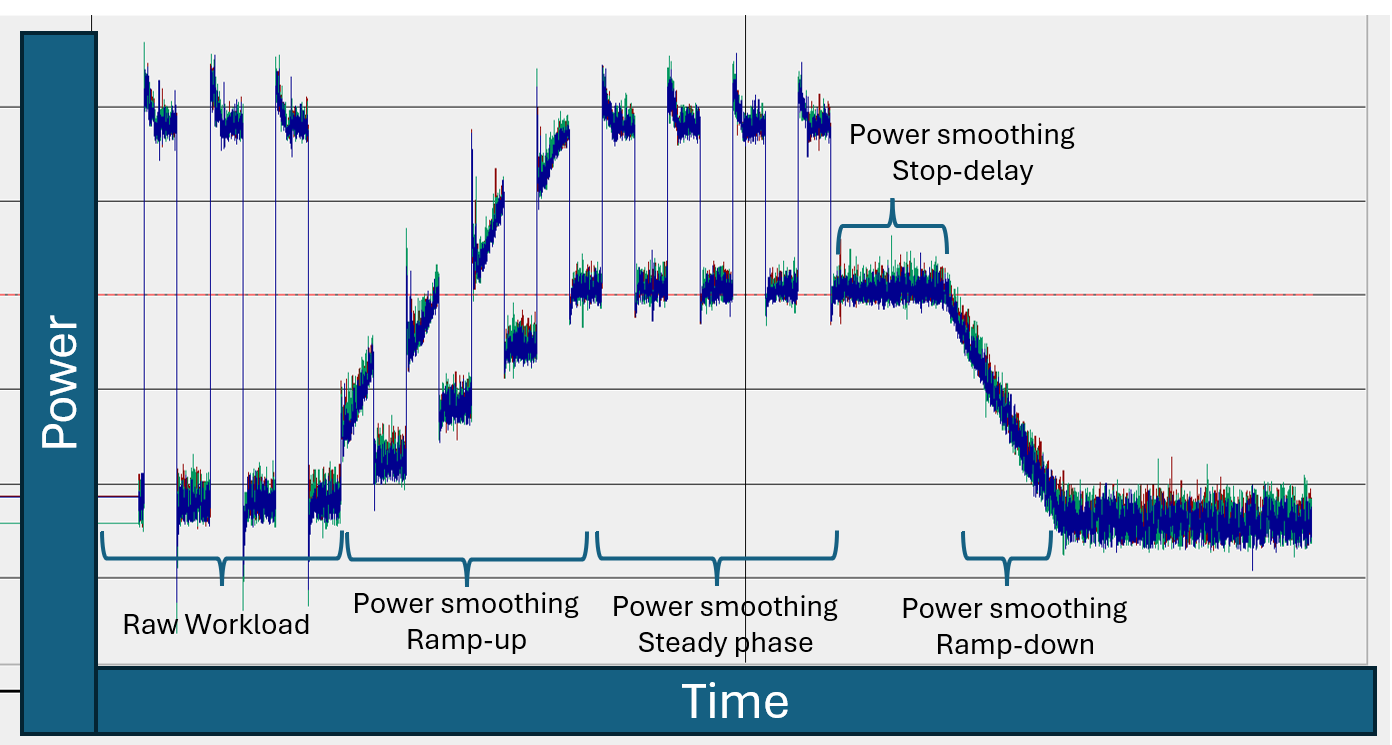
Power Variability Characteristics:
|
Workload
|
Base Load
|
Peak Load
|
Variability Frequency
|
|---|---|---|---|
|
AI Training
|
25-30 MW/facility
|
45 MW (50% surge)
|
Every 2-4 hours (batch jobs)
|
|
LLM Inference
|
5-10 MW/facility
|
12 MW (spikes)
|
Seconds-minutes (user traffic)
|
|
HPC Batch
|
15-20 MW/facility
|
28 MW
|
Every 6-12 hours
|
Power Capacitance Shelves:
-
- Capacity: 100-500 kWh per rack/row
- Response Time: <10 milliseconds
- Use Case: Training racks (mandatory), high-volume LLM inference (recommended)
-
- Prevents voltage sags and grid instability
- Reduces peak demand charges (can save $500k-$2M/year)
- Extends UPS lifespan (fewer deep discharge cycles)
- Enables higher rack densities without grid upgrades
AI Practitioner’s View:
Power capacitance is underutilized in inference deployments today, but this will change dramatically by 2027. As LLM inference scales to millions of concurrent users, the aggregate power profile will become as spiky as training. I recommend designing all AI racks >40 kW with integrated capacitance, regardless of workload type.
Part 2: AI Accelerators Deep Dive
The Accelerator Landscape: Beyond NVIDIA
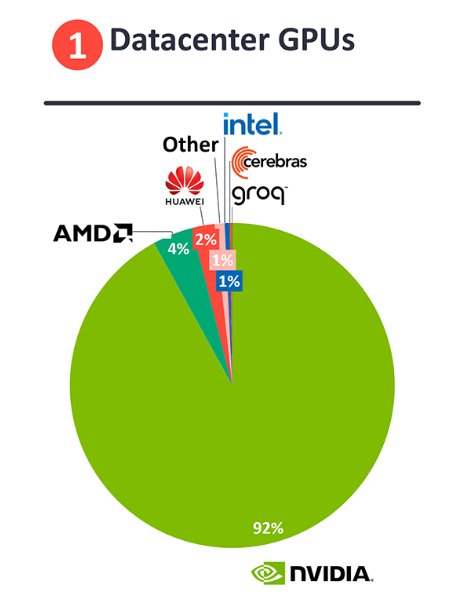
NVIDIA GPUs: The Gold Standard
Given the massive share in the AI accelerator market (90%+) we start our analysis first with certain Nvidia GPUs.
NVIDIA H200 (Hopper Architecture)
-
- FP8 Performance: 3,958 TFLOPS (with sparsity)
- FP16/BF16: 1,979 TFLOPS
- Memory: 141 GB HBM3 @ 4.8 TB/s bandwidth
- TDP: 700W
- Interconnect: NVLink 4.0 (900 GB/s), PCIe 5.0
- Price: $25,000-$40,000 per GPU
-
- Mature software ecosystem (CUDA, cuDNN, TensorRT)
- Best-in-class training performance for LLMs
- Multi-Instance GPU (MIG) for inference partitioning
- Transformer Engine for FP8 acceleration
-
- Premium pricing (2-3x vs. alternatives)
- Supply constraints (12-18 month lead times)
- Power-hungry (700W TDP)
NVIDIA B200 (Blackwell Architecture)
-
- FP4 Performance: 20,000 TFLOPS (with sparsity)
- FP8 Performance: 10,000 TFLOPS
- Memory: 192 GB HBM3e @ 8 TB/s bandwidth
- TDP: 1,200W (requires liquid cooling)
- Interconnect: NVLink 5.0 (1.8 TB/s)
- Price: $30,000-$50,000 per GPU (estimated)
-
- 5x performance improvement vs. H100 for inference
- 2x improvement for training
- Second-generation Transformer Engine (FP4 support)
- Confidential computing (encrypted GPU memory)
-
- Extreme power density (1,200W requires D2C/immersion)
- Availability: Q3 2025+ (limited initial supply)
- Software maturity: CUDA optimizations still rolling out
NVIDIA GB200 NVL72 (Grace-Blackwell Superchip)
-
- Configuration: 72 Blackwell GPUs + 36 Grace CPUs in single rack
- Aggregate Performance: 720,000 TFLOPS (FP4)
- Memory: 13.8 TB HBM3e (aggregate)
- Power: 120 kW/rack (requires liquid cooling)
- Interconnect: NVLink 5.0 (130 TB/s aggregate bandwidth)
-
- Rack-scale architecture (eliminates network bottlenecks)
- Best price-performance for large-scale training
- Unified memory across GPUs (simplifies programming)
-
- Vendor lock-in (proprietary rack design)
- Infrastructure requirements (120 kW/rack, liquid cooling mandatory)
- CapEx: $3-5M per rack
NVIDIA L40S (Ada Lovelace chip – Inference-Optimized)
-
- FP16 Performance: 181 TFLOPS
- INT8 Performance: 733 TOPS
- Memory: 48 GB GDDR6 @ 864 GB/s
- TDP: 350W
- Price: $10,000-$15,000
-
- Cost-effective for inference (50% cheaper than H100)
- Power-efficient (350W vs. 700W)
- AV1 encoding (ideal for video AI)
- PCIe form factor (fits standard servers)
-
- Lower memory bandwidth (864 GB/s vs. 3.35 TB/s H100)
- Not suitable for large-scale training
Non-GPU Accelerators: The Alternatives
1. AMD Instinct MI Series
-
- FP16 Performance: 1,307 TFLOPS
- Memory: 192 GB HBM3 @ 5.2 TB/s bandwidth
- TDP: 750W
- Interconnect: Infinity Fabric (896 GB/s), PCIe 5.0
- Price: $15,000-$25,000 (40% cheaper than H100)
-
- Competitive performance for inference (matches H100 in many workloads)
- Superior memory capacity (192 GB vs. 80 GB H100)
- Open-source software (ROCm avoids CUDA lock-in)
- Better availability (less demand than NVIDIA)
-
- Software ecosystem maturity lags CUDA (fewer optimized libraries)
- Training performance ~20-30% behind H100 for LLMs
- Enterprise adoption still building momentum
-
- FP16 Performance: 2,000+ TFLOPS (estimated)
- Memory: 256 GB HBM3e @ 6 TB/s
- TDP: 900W
- Price: $20,000-$30,000 (estimated)
AI Practitioner’s View:
AMD is executing a brilliant wedge strategy. Instead of competing head-to-head on training, they’re dominating inference and memory-intensive workloads (large context windows, RAG applications). The MI300X’s 192 GB memory is a game-changer for LLM inference with 100K+ token contexts. By 2027, I expect AMD to capture 20-25% market share, primarily in inference and cost-sensitive training.
2. Intel Habana Gaudi
-
- FP16 Performance: 432 TFLOPS
- Memory: 96 GB HBM2e @ 2.4 TB/s
- TDP: 600W
- Interconnect: 21x 100 GbE RoCE (no InfiniBand required)
- Price: $10,000-$15,000
-
- Best price-performance for training (2-3x better than H100)
- Ethernet-based networking (cheaper than InfiniBand)
- Integrated in AWS (Trainium collaboration)
- Strong for BERT/GPT-style models
-
- Limited software ecosystem (SynapseAI less mature than CUDA)
- Not suitable for all workloads (performance varies by model)
- Lower brand recognition in enterprise
-
- FP16 Performance: 1,835 TFLOPS
- Memory: 128 GB HBM2e @ 3.7 TB/s
- TDP: 900W
- Price: $15,000-$20,000
AI Practitioner’s View:
Intel’s Gaudi is the dark horse in the accelerator race. For organizations running standard LLM training (not cutting-edge research), Gaudi delivers 40-50% lower TCO than NVIDIA. The Ethernet-based architecture is brilliant—it eliminates the $500k-$1M InfiniBand cost per rack. However, Intel must invest heavily in software ecosystem to compete long-term.
My recommendation: Use Gaudi for internal model training (where CUDA ecosystem isn’t critical), NVIDIA for customer-facing AI services.
3. Cerebras Wafer-Scale Engine (WSE)
-
- Architecture: Single wafer-scale chip (46,225 mm²)
- Cores: 900,000 AI-optimized cores
- Memory: 44 GB on-chip SRAM (20 TB/s bandwidth)
- Performance: 1,000+ PFLOPS (sparse)
- Price: $3-5M per system (CS-3)
-
- Unparalleled performance for very large models (100B+ parameters)
- Eliminates inter-GPU communication (single-chip architecture)
- Simplified programming (no model parallelism required)
-
- Niche focus (only viable for massive models)
- Extreme cost ($3-5M per system)
- Vendor lock-in (proprietary software stack)
- Infrastructure requirements (specialized cooling, power)
AI Practitioner’s View:
Cerebras is either genius or cool insanity, depending on your perspective. For training massive models (100B+ parameters), the WSE eliminates the network bottleneck entirely. However, the $3-5M price tag and specialized infrastructure requirements make it viable only for well-funded research institutions or hyperscalers. I don’t recommend Cerebras for enterprise AI—stick with NVIDIA or AMD.
4. Groq Tensor Streaming Processor (TSP)
-
- Architecture: Deterministic, single-core streaming
- Performance: 1,000+ tokens/sec (Llama 2 70B inference)
- Latency: <10ms p99 (best-in-class)
- Power: 300W
- Price: $15,000-$25,000 (estimated)
-
- Fastest inference for LLMs (5-10x faster than GPU)
- Deterministic latency (critical for real-time applications)
- Power-efficient (300W vs. 700W GPU)
- No software compilation (runs PyTorch directly)
-
- Inference-only (cannot train)
- Limited model support (optimized for transformer architectures)
- Newer player (smaller ecosystem)
AI Practitioner’s View:
Groq is solving the wrong problem for most enterprises. Yes, it’s 10x faster than GPUs for inference, but most applications don’t need sub-10ms latency. A chatbot responding in 100ms vs. 10ms is indistinguishable to users. However, for high-throughput inference (millions of requests/day), Groq’s power efficiency and speed deliver 5-10x better cost-per-inference. I recommend Groq for scale-out inference where throughput matters more than individual request latency.
5. Graphcore Intelligence Processing Unit (IPU)
-
- Cores: 1,472 independent processor cores
- Memory: 96 MB on-chip SRAM (48 TB/s aggregate)
- Performance: 350 TFLOPS (FP16)
- Architecture: Graph-based, sparse computation
-
- Excellent for graph neural networks (GNNs)
- Massive parallelism (1,472 cores)
- Efficient for sparse workloads (recommendation systems)
-
- Different programming paradigm (requires Poplar SDK)
- Limited adoption (niche use cases)
- Not optimized for dense transformer models
6. AWS Trainium & Inferentia
-
- Performance: 50x price-performance vs. GPU (AWS claim)
- Memory: 128 GB HBM3
- Interconnect: AWS NeuronLink (proprietary)
- Price: Available only on AWS (no bare-metal purchase)
-
- Performance: 4x throughput vs. GPU for inference
- Latency: 50% lower than GPU
- Price: $0.50-$2.00/hour (on-demand)
-
- Best price-performance for AWS-native workloads
- Tight integration with AWS services (SageMaker, Bedrock)
- No CapEx (OpEx-only model)
-
- Vendor lock-in (AWS-only)
- Limited software ecosystem (Neuron SDK vs. CUDA)
- Not portable (cannot migrate to other clouds)
AI Practitioner’s View:
AWS custom silicon is a strategic masterstroke. By offering 50% lower prices than NVIDIA GPUs, AWS creates a pricing umbrella that forces NVIDIA to compete on price. However, the lock-in risk is real. Once you optimize your models for Trainium/Inferentia, migrating to Azure or GCP becomes expensive. My recommendation: Use Trainium/Inferentia for non-mission-critical workloads or burst capacity, but maintain NVIDIA/GPU expertise for portability.
Accelerator Comparative Analysis
|
Accelerator
|
FP16 TFLOPS
|
Memory
|
TDP
|
Price
|
Price/TFLOPS
|
Best Use Case
|
|---|---|---|---|---|---|---|
|
NVIDIA H200
|
1,979
|
141 GB HBM3
|
700W
|
$30k
|
$15.16/TFLOPS
|
Frontier LLM training
|
|
NVIDIA B200
|
~4,000
|
192 GB HBM3e
|
1,200W
|
$40k
|
$10.00/TFLOPS
|
Next-gen training
|
|
AMD MI300X
|
1,307
|
192 GB HBM3
|
750W
|
$20k
|
$15.30/TFLOPS
|
Large-context inference
|
|
Intel Gaudi 3
|
1,835
|
128 GB HBM2e
|
900W
|
$18k
|
$9.81/TFLOPS
|
Budget training
|
|
Cerebras WSE-3
|
~1,000,000
|
44 GB SRAM
|
20kW
|
$4M
|
$4.00/TFLOPS
|
Massive model training
|
|
Accelerator
|
Throughput
|
Latency (p99)
|
Power
|
Cost/Inference
|
Best Use Case
|
|---|---|---|---|---|---|
|
NVIDIA L40S
|
1,000 inferences/sec
|
50ms
|
350W
|
$0.0001
|
General inference
|
|
Groq TSP
|
5,000 inferences/sec
|
<10ms
|
300W
|
$0.00002
|
Real-time LLM
|
|
AWS Inferentia2
|
2,000 inferences/sec
|
30ms
|
250W
|
$0.00005
|
AWS-native inference
|
|
AMD MI300X
|
800 inferences/sec
|
80ms
|
750W
|
$0.00015
|
Large-context RAG
|
SWOT Analysis: GPU vs. Non-GPU Accelerators
|
Category
|
NVIDIA GPUs
|
AMD Instinct
|
Intel Gaudi
|
Custom ASICs (Trainium/Groq)
|
|---|---|---|---|---|
|
Strengths
|
• Mature CUDA ecosystem
• Best training performance • Broad software support • Multi-generational roadmap |
• Competitive pricing
• Large memory capacity • Open-source ROCm • Good availability |
• Best price-performance
• Ethernet-based (no InfiniBand) • AWS integration |
• Superior price-performance
• Workload-specific optimization • Power efficiency |
|
Weaknesses
|
• Premium pricing
• Supply constraints • High power consumption • Vendor lock-in risk |
• Software ecosystem maturity
• Training performance gap • Lower enterprise adoption |
• Limited software ecosystem
• Workload-dependent performance • Brand recognition |
• Vendor lock-in (extreme)
• Limited workload support • Portability challenges |
|
Opportunities
|
• B200/GB200 launch
• Sovereign AI demand • Inference market growth • Edge AI expansion |
• Inference market share gain
• EU sovereignty push • HPC convergence • ROCm adoption |
• Cost-sensitive training
• AWS partnership expansion • Enterprise AI adoption |
• Hyperscaler custom silicon
• Specialized workloads • Edge AI proliferation |
|
Threats
|
• AMD/Intel competition
• Custom silicon disruption • Regulatory scrutiny • Export restrictions (China) |
• NVIDIA price cuts
• Software ecosystem gap • Execution risk |
• NVIDIA/AMD dominance
• Software investment requirements • Market share stagnation |
• Hyperscaler dependency
• Workload evolution • Competition from GPUs |
AI Practitioner’s View:
The accelerator market is stratifying by workload. NVIDIA will dominate frontier model training (where performance matters most). AMD will capture inference and large-context workloads (where memory capacity matters). Intel will own budget-conscious training (where TCO matters). Custom ASICs (Groq, Trainium) will dominate high-volume inference (where cost-per-inference matters). The key insight: heterogeneous accelerator pools orchestrated by intelligent schedulers will become the norm by 2028. Don’t standardize on a single vendor—design for flexibility.
Part 3: Memory Hierarchies & Technologies
Memory: The Hidden Bottleneck
-
- HBM4 (High Bandwidth Memory): 2-3 kW per stack
- LPDDR5: 500W-1 kW per module
- Total Memory Power: 20-30% of rack power budget (up from 10% in 2020)
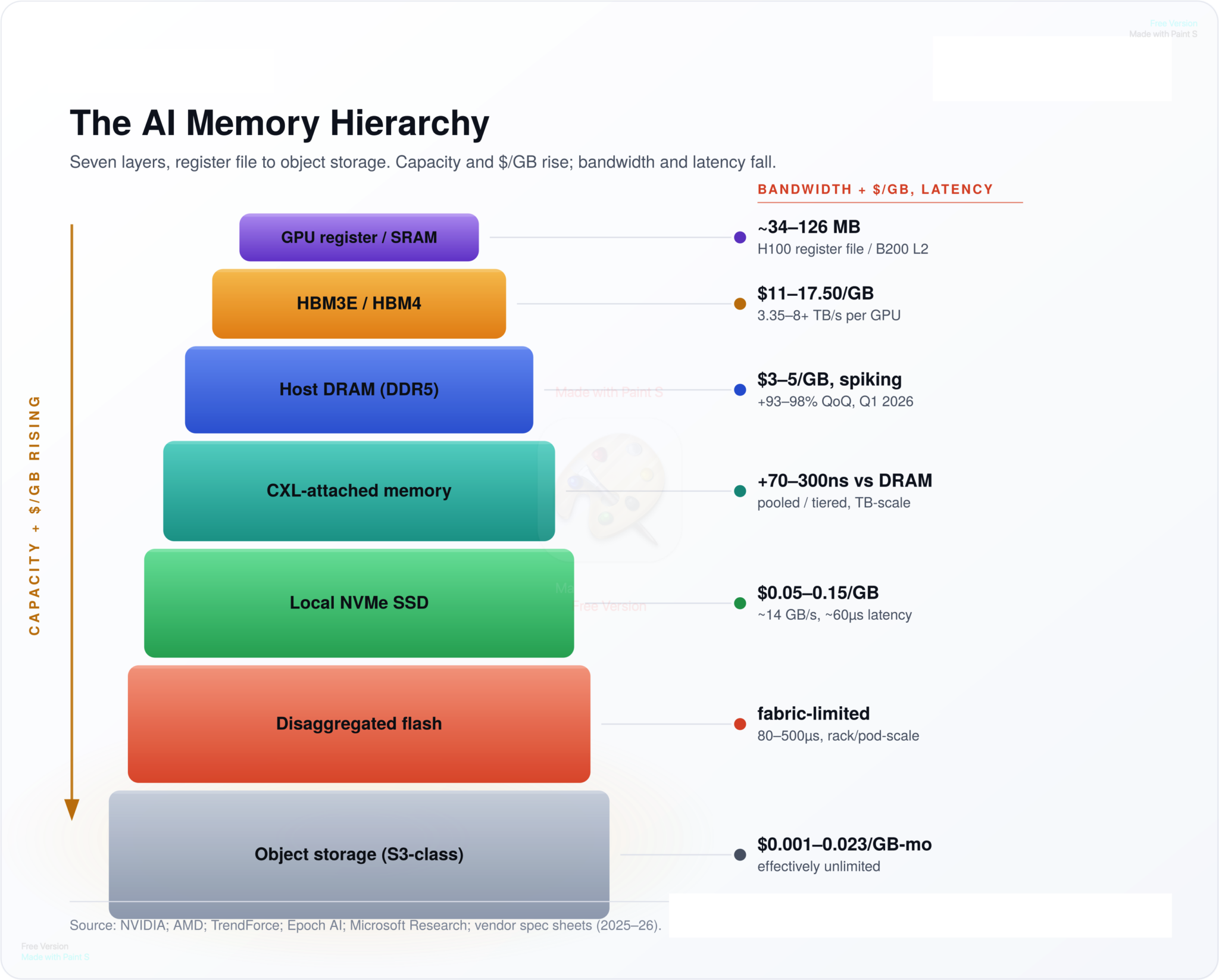
HBM (High Bandwidth Memory): The Training Standard
HBM3 (Current Generation)
-
- Bandwidth: 3.35 TB/s (NVIDIA H100), 5.2 TB/s (AMD MI300X)
- Capacity: 80-192 GB per GPU
- Power: 2-3 kW per stack
- Cost: $500-$1,000 per GB (estimated)
-
- AI Training (mandatory for large models)
- High-performance Inference (large context windows)
-
- Highest bandwidth (10x GDDR6)
- 3D stacking (vertical integration saves space)
- Low latency (on-package integration)
-
- Extreme cost ($500-$1,000/GB)
- Supply constraints (SK Hynix, Samsung, Micron only)
- High power consumption (2-3 kW per stack)
HBM4 (Next Generation, 2026-2027)
-
- Bandwidth: 8-10 TB/s (estimated)
- Capacity: 256-512 GB per GPU
- Power: 3-4 kW per stack
- Process: 12-layer stacking (vs. 8-layer HBM3)
-
- 2x bandwidth vs. HBM3
- 2x capacity (enables 1M+ token contexts)
- Better power efficiency (bandwidth per watt)
-
- Availability: Q4 2026+ (limited initial supply)
- Cost: $1,000-$1,500/GB (estimated)
- Thermal challenges (higher power density)
AI Practitioner’s View:
HBM4 is essential for next-gen LLM training, but overkill for most inference workloads. If your use case doesn’t require 100K+ token contexts or trillion-parameter models, HBM3 is sufficient. The cost premium for HBM4 (2-3x) is hard to justify for production inference.
I recommend a tiered memory strategy: HBM4 for training clusters, HBM3 for high-end inference, GDDR6/LPDDR5 for cost-sensitive inference.
LPDDR5 & SOCAMM2: The Efficiency Play
LPDDR5 (Low Power DDR5)
-
- Bandwidth: 6.4-8.5 GB/s per pin
- Capacity: 16-64 GB per module
- Power: 10-15W per 16 GB module
- Cost: $50-$100 per GB
-
- Edge AI (power-constrained environments)
- Inference accelerators (Groq, AWS Inferentia)
- x86 AI servers (Intel/AMD CPUs with integrated AI)
-
- Power efficiency (10x better than HBM)
- Lower cost ($50-100/GB vs. $500-1,000/GB HBM)
- Standard form factor (easy to upgrade)
-
- Lower bandwidth (100x less than HBM)
- Higher latency (off-package vs. on-package)
- Not suitable for large-scale training
SOCAMM2 (Small Outline CAMM2)
-
- Standard: JEDEC JESD328 (2024)
- Bandwidth: 8-12 GB/s per pin
- Capacity: 32-128 GB per module
- Power: 15-20W per module
- Form Factor: 50% smaller than traditional DIMMs
-
- AI host nodes (x86 servers with AI accelerators)
- Dense power-constrained servers
- CXL memory expansion (capacity tier)
-
- Compact design (enables higher server density)
- Better power efficiency vs. traditional DDR5
- Standardization (multi-vendor ecosystem forming)
-
- Emerging standard (limited availability in 2024-2025)
- Higher cost than traditional DIMMs (early adopter premium)
- Requires new server designs (not backward compatible)
AI Practitioner’s View:
SOCAMM2 is the sleeper technology of AI infrastructure. As x86 servers integrate more AI accelerators (NPUs, GPUs), the memory power budget becomes critical. SOCAMM2’s 50% size reduction and improved efficiency enable denser AI servers without thermal runaway.
I predict SOCAMM2 adoption will accelerate in 2026-2027, particularly for AI inference servers and edge AI deployments.
Memory Adoption Scenarios: Pragmatic Roadmap
-
- LPDDR5 dominates non-x86 platforms (NVIDIA Grace/Vera, ARM-based AI accelerators)
- HBM3 remains standard for AI training
- GDDR6 sufficient for cost-sensitive inference
-
- x86 adoption of LPDDR5/SOCAMM2 becomes realistic IF:
- Multi-vendor ecosystem develops (Intel, AMD, Samsung, Micron)
- Server memory controllers support LPDDR broadly
- Data center clients accept new operational model
- HBM4 becomes standard for frontier training
- SOCAMM2 adopted for AI host nodes and CXL memory expansion
- x86 adoption of LPDDR5/SOCAMM2 becomes realistic IF:
-
- Hybrid memory architectures (HBM4 + LPDDR5 + CXL) become standard
- Memory tiering orchestrated by AI schedulers
- Memory power becomes primary constraint (not bandwidth)
|
Technology
|
Bandwidth
|
Capacity
|
Power
|
Cost
|
Best Use Case
|
|---|---|---|---|---|---|
|
HBM4
|
8-10 TB/s
|
256-512 GB
|
3-4 kW
|
$1,000-1,500/GB
|
Frontier LLM training
|
|
HBM3
|
3-5 TB/s
|
80-192 GB
|
2-3 kW
|
$500-1,000/GB
|
AI training, large-context inference
|
|
GDDR6
|
800 GB/s – 1.5 TB/s
|
16-48 GB
|
300-500W
|
$50-100/GB
|
General inference
|
|
LPDDR5
|
6.4-8.5 GB/s/pin
|
16-64 GB
|
10-15W/module
|
$50-100/GB
|
Edge AI, inference accelerators
|
|
SOCAMM2
|
8-12 GB/s/pin
|
32-128 GB
|
15-20W/module
|
$75-150/GB
|
AI host nodes, CXL expansion
|
CXL (Compute Express Link): The Future of Memory Expansion
-
- Type 3 Devices: Memory expanders (SSD-like form factor, DRAM-like performance)
- Capacity: 1-8 TB per device
- Latency: 500-800 ns (vs. 100 ns for local DRAM)
- Bandwidth: 32-64 GB/s (PCIe 5.0 x16)
-
- Memory pooling (share memory across GPU cluster)
- Capacity expansion (add TBs of memory without adding GPUs)
- Cost optimization (cheaper than HBM for capacity tier)
AI Practitioner’s View:
CXL is the most underappreciated technology in AI infrastructure. By 2028, CXL will enable memory disaggregation, allowing organizations to pool memory across GPU clusters. This reduces the need to over-provision HBM on every GPU. For large-scale inference (where models are read-only), CXL memory pooling can reduce memory CapEx by 40-50%.
I recommend designing AI datacenters with CXL-ready infrastructure (PCIe 5.0 switches, adequate power/cooling for memory expanders).
Part 4: Ultra-Low Latency Networking
The Network Fabric: Make or Break for AI Training
Network Requirements by Workload:
|
Workload
|
Bandwidth
|
Latency
|
Topology
|
Protocol
|
|---|---|---|---|---|
|
AI Training (Large-Scale)
|
400-800 Gbps/node
|
<1 μs
|
Non-blocking fat-tree
|
InfiniBand NDR/HDR
|
|
AI Training (Mid-Scale)
|
200-400 Gbps/node
|
<2 μs
|
Oversubscribed (2:1)
|
InfiniBand or RoCE
|
|
AI Inference
|
100-200 Gbps/node
|
<10 μs
|
Standard leaf-spine
|
Ethernet (400/800GbE)
|
|
HPC Batch
|
100-200 Gbps/node
|
<5 μs
|
Fat-tree
|
InfiniBand or RoCE
|
InfiniBand vs. Ethernet: The Great Debate
InfiniBand (NVIDIA Mellanox)
Current Generation: InfiniBand NDR (400 Gbps)
-
- Bandwidth: 400 Gbps per port (NDR), 800 Gbps (NDR2x)
- Latency: <600 ns (best-in-class)
- Topology: Non-blocking fat-tree (requires high radix switches)
- Protocol: Native InfiniBand (not IP-based)
-
- Lowest latency (critical for tightly-coupled training)
- RDMA (Remote Direct Memory Access) (bypasses CPU)
- Adaptive routing (avoids congestion)
- Proven at scale (100,000+ GPU clusters)
-
- Vendor lock-in (NVIDIA dominates 90% market)
- Higher cost ($500k-$1M per rack for switches/cables)
- Complexity (requires InfiniBand expertise)
- Not IP-native (separate network from storage/management)
Next Generation: InfiniBand XDR (800 Gbps)
-
- Bandwidth: 800 Gbps per port
- Latency: <400 ns
- Availability: Q2 2025 (limited), Q4 2025 (general)
- Price: $10,000-$15,000 per port (estimated)
Ethernet (RoCE – RDMA over Converged Ethernet)
Current Generation: 400/800 GbE
-
- Bandwidth: 400 Gbps (400GbE), 800 Gbps (800GbE)
- Latency: <2 μs (with RoCE v2)
- Protocol: IP-based (standard Ethernet)
- Standards: IEEE 802.3bs (400GbE), 802.3df (800GbE)
-
- Lower cost ($200k-$500k per rack vs. $500k-$1M InfiniBand)
- IP-native (unified network for compute, storage, management)
- Multi-vendor ecosystem (Arista, Cisco, Juniper, white-box)
- Easier to manage (familiar Ethernet tooling)
-
- Higher latency (2 μs vs. 600 ns InfiniBand)
- Congestion management (requires careful tuning)
- Not as proven at 100,000+ GPU scale
Spectrum-X Ethernet (NVIDIA’s Answer to InfiniBand)
-
- Bandwidth: 400/800 Gbps
- Latency: <1 μs (approaching InfiniBand)
- Congestion Control: AI-driven (machine learning-based)
- Integration: Tight coupling with NVIDIA GPUs
-
- Near-InfiniBand performance with Ethernet flexibility
- Unified network (AI + storage + management)
- Lower cost than InfiniBand
- NVIDIA ecosystem (optimized for CUDA, NCCL)
-
- Vendor lock-in (NVIDIA-specific)
- Newer technology (less proven at scale)
- Requires NVIDIA BlueField DPUs (additional cost)
AI Practitioner’s View:
Spectrum-X is NVIDIA’s strategic masterstroke. It allows them to compete in the Ethernet market while maintaining their AI dominance. For organizations wanting NVIDIA ecosystem benefits without InfiniBand complexity, Spectrum-X is the sweet spot. However, if you’re running heterogeneous accelerators (AMD, Intel, custom ASICs), standard RoCE Ethernet provides better vendor neutrality.
Switch Technologies: 51.2T and 102.4T Generations
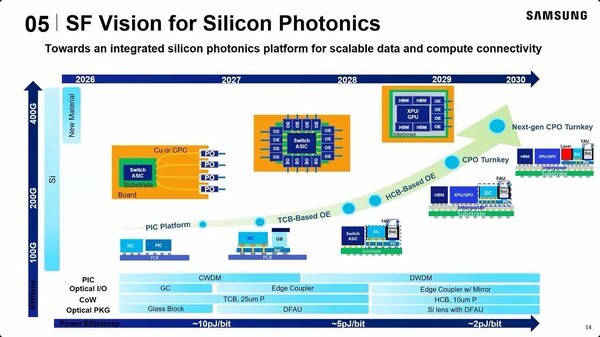
51.2 Tbps Switch Generation (Current High-End)
This is the current high-end switch generation, and the Principal Players include:
1. Broadcom Tomahawk 5
-
- Capacity: 51.2 Tbps aggregate
- Ports: 64x 800 Gbps or 128x 400 Gbps
- Power: 1,200W per ASIC
- Use Cases: Hyperscaler AI clusters, large-scale training
-
- Dominant merchant silicon (70%+ market share)
- Cost-effective (vs. proprietary ASICs)
- SONiC support (open-source NOS)
- Multi-vendor ecosystem (Arista, Celestica, Delta)
-
- Not AI-optimized (general-purpose merchant silicon)
- Requires tuning for AI workloads (congestion control)
2. NVIDIA Spectrum-4 (SN5600)
-
- Capacity: 51.2 Tbps aggregate
- Ports: 64x 800 Gbps
- Power: 1,400W per switch
- Integration: Spectrum-X AI platform
-
- AI-optimized (congestion control, adaptive routing)
- Tight NVIDIA GPU integration
- Proven at scale (100,000+ GPU deployments)
-
- Vendor lock-in (NVIDIA ecosystem)
- Higher cost (vs. Tomahawk-based white-box)
3. Cisco Silicon One P200
-
- Capacity: 51.2 Tbps aggregate
- Ports: 64x 800 Gbps
- Power: 1,300W per ASIC
- Platform: Nexus 9000 series
-
- Programmable ASIC (custom-tuned performance)
- Full-stack portfolio (compute, security, observability)
- Enterprise focus (robust security, compliance)
- UEC leadership (Ultra Ethernet Consortium co-founder)
-
- Higher cost (vs. merchant silicon)
- Smaller AI ecosystem (vs. NVIDIA)
102.4 Tbps Switch Generation (Next-Gen, 2026-2027)
This will be the next generation of switches, hitting the market in the 2026-27 timeframe. Key Technical Requirements include:
-
- Port Speed: 1.6 Tbps per port (200G lanes)
- Technology: Co-Packaged Optics (CPO) mandatory
- Power: 2,000-2,500W per ASIC (requires liquid cooling)
- Standards: Ultra Ethernet Consortium (UEC) specifications
1. Broadcom Tomahawk 6
-
- Capacity: 102.4 Tbps aggregate
- Ports: 64x 1.6 Tbps or 128x 800 Gbps
- CPO Support: Yes (first-mover advantage)
- Availability: Q4 2025 (samples), Q2 2026 (general)
-
- Technology leadership (first 102.4T merchant silicon)
- CPO integration (reduces power, latency)
- Hyperscaler preference (AWS, Google, Meta)
2. Cisco Silicon One G200 (UEC-Optimized)
-
- Capacity: 102.4 Tbps aggregate
- Ports: 64x 1.6 Tbps
- UEC Features: Native support for DSF (Dynamic Stream Fabric)
- Availability: Q2 2026 (estimated)
-
- UEC-native (optimized for AI Ethernet)
- Programmable (custom AI features)
- Integrated stack (security, observability, compute)
3. NVIDIA Quantum-X800 (Next-Gen InfiniBand)
-
- Capacity: 102.4 Tbps aggregate
- Ports: 64x 1.6 Tbps InfiniBand
- Latency: <300 ns
- Availability: Q4 2026 (estimated)
-
- Performance leadership (lowest latency)
- Tight GPU integration (NVLink + InfiniBand)
- Proven at scale
Ultra Ethernet Consortium (UEC): The Game Changer
-
- DSF (Dynamic Stream Fabric): Adaptive congestion control
- Packet-level load balancing: Better utilization than flow-based
- Reliability: Lossless Ethernet (no packet drops)
- Latency: Target <1 μs (approaching InfiniBand)
-
- Specification 1.0: Q2 2025
- First Products: Q4 2025 – Q2 2026
- Widespread Adoption: 2027+
AI Practitioner’s View:
UEC is the most important networking development for AI infrastructure. If UEC delivers on its promises, it will close the performance gap with InfiniBand while maintaining Ethernet’s cost and flexibility advantages. This is critical for multi-vendor accelerator pools (AMD, Intel, custom ASICs) that can’t use NVIDIA InfiniBand.
I recommend delaying large-scale network purchases until Q2 2026 if possible, to evaluate UEC-optimized switches. If you must buy now, choose programmable switches (Cisco Silicon One, Arista 7800R) that can be upgraded via software to support UEC features.
Network Topology Design: Best Practices
Fat-Tree Topology (Non-Blocking):
-
- Leaf switches: Connect to servers (1:1 ratio)
- Spine switches: Connect all leaf switches (full mesh)
- Oversubscription: 1:1 (no oversubscription)
-
- Non-blocking (full bisection bandwidth)
- Predictable latency (consistent performance)
- Scalability (add spine switches to scale)
-
- High cost (many switches, many cables)
- Power consumption (more switches = more power)
Oversubscribed Topology (Cost-Optimized):
-
- Oversubscription ratio: 2:1 or 4:1
- Example: 4 leaf switches share 1 spine switch
-
- Lower cost (fewer spine switches)
- Lower power (fewer switches)
- Simpler cabling
-
- Potential congestion (during all-to-all communication)
- Variable latency (depends on traffic patterns)
Network Topology Comparison
|
Topology
|
Oversubscription
|
Cost
|
Performance
|
Best Use Case
|
|---|---|---|---|---|
|
Non-Blocking Fat-Tree
|
1:1
|
High
|
Best
|
Large-scale training (1,000+ GPUs)
|
|
Oversubscribed Fat-Tree
|
2:1
|
Medium
|
Good
|
Mid-scale training (100-1,000 GPUs)
|
|
Leaf-Spine
|
4:1
|
Low
|
Acceptable
|
AI inference, HPC batch
|
|
Dragonfly+
|
Varies
|
Medium
|
Excellent
|
Very large clusters (10,000+ GPUs)
|
Networking KPIs: What to Measure
|
KPI
|
Target
|
Measurement Method
|
|---|---|---|
|
Latency (p99)
|
<1 μs (training), <10 μs (inference)
|
NCCL tests, ping-pong benchmarks
|
|
Bandwidth Utilization
|
>80% (training), >60% (inference)
|
Switch port counters, NCCL bandwidth test
|
|
Packet Loss
|
<0.001% (lossless required)
|
Switch error counters
|
|
Congestion Events
|
<1 per hour
|
Switch buffer utilization monitoring
|
|
Bisection Bandwidth
|
>90% of theoretical
|
Synthetic all-to-all benchmarks
|
AI Practitioner’s View:
Don’t trust vendor specifications—measure everything. I’ve seen “400 Gbps” networks deliver only 250 Gbps effective bandwidth due to poor congestion control. Use NCCL tests (NVIDIA Collective Communications Library) to validate real-world performance. For training clusters, latency matters more than bandwidth. A 500 ns latency network will outperform a 2 μs network, even if both have 400 Gbps bandwidth.
Part 5: Power & Cooling Innovations
Power: The Ultimate Constraint
Power Requirements by Scale:
|
Facility Size
|
IT Load
|
Total Power (incl. cooling)
|
Grid Connection Time
|
|---|---|---|---|
|
Small/Edge
|
1-5 MW
|
1.5-7 MW
|
12-18 months
|
|
Mid-Sized
|
10-20 MW
|
14-28 MW
|
24-36 months
|
|
Large/Hyperscale
|
50-100 MW
|
70-140 MW
|
36-48 months
|
|
Gigawatt-Scale
|
500+ MW
|
700+ MW
|
60+ months
|
Advanced Cooling Technologies
Direct-to-Chip (D2C) Liquid Cooling: Deep Dive
-
- Cold Plates: Copper/aluminum heat exchangers mounted on GPUs/CPUs
- Cooling Distribution Unit (CDU): Pumps, heat exchangers, controls
- Manifolds: Distribute coolant to racks
- Quick Disconnects: Leak-proof connections for hot-swapping
- Coolant: Dielectric fluid or water-glycol mixture
-
- Flow Rate: 2-4 liters/minute per rack
- Temperature Delta: 10-15°C (inlet to outlet)
- Pressure: 2-4 bar (30-60 PSI)
- Leak Detection: <1 second response time
-
- Redundancy: Dual CDUs (N+1 or 2N)
- Monitoring: Real-time flow, temperature, pressure sensors
- Maintenance: Hot-swappable cold plates (no system shutdown)
-
- CapEx: $2-3M/MW (vs. $1-1.5M/MW for air cooling)
- OpEx Savings: 30-40% lower energy costs (PUE 1.15 vs. 1.5)
- Payback Period: 2-3 years
Immersion Cooling: Deep Dive
System Types:
-
- Fluid: Mineral oil, synthetic hydrocarbons
- Temperature: 40-50°C operating
- Heat Removal: External heat exchangers
- Advantages: Simpler, lower cost
- Disadvantages: Lower efficiency vs. two-phase
-
- Fluid: 3M Novec, Shell Immersion Cooling Fluid
- Temperature: 50-60°C operating
- Heat Removal: Evaporative cooling (fluid boils at component surface)
- Advantages: Highest efficiency (PUE 1.05-1.10)
- Disadvantages: Higher fluid cost, more complex
-
- Density: Up to 250 kW/rack
- Fluid Volume: 5,000-10,000 liters per tank
- Fluid Cost: $50-100/liter
- Fluid Lifetime: 5-10 years (periodic testing/replacement)
-
- CapEx: $4-5M/MW (vs. $2-3M/MW for D2C)
- OpEx Savings: 40-50% lower energy costs (PUE 1.05-1.12)
- Payback Period: 3-5 years
- Additional Benefits: Extended hardware lifespan (no thermal cycling, dust)
AI Practitioner’s View:
Immersion cooling is worth the premium for facilities >50 MW. The PUE advantage (1.05 vs. 1.15) saves $5-10M/year in energy costs at 100 MW scale. Additionally, immersion cooling enables waste heat recovery at 60-80°C, suitable for district heating.
In Europe, where carbon taxes and sustainability mandates are strict, immersion cooling’s ESG benefits justify the CapEx premium. For mid-sized facilities (10-50 MW), D2C offers better economics.
Waste Heat Recovery: Turning Liability into Asset
-
- D2C Cooling: 40-50°C output (suitable for district heating)
- Immersion Cooling: 60-80°C output (ideal for industrial processes)
- Heat Recovery Efficiency: 60-80% of total heat load
-
- Revenue Stream: Sell heat to municipalities ($10-30/MWh thermal)
- Carbon Credits: Offset emissions (EU ETS, voluntary markets)
- Regulatory Compliance: Meet EU Green Deal requirements
-
- Stockholm Data Parks: 150 MW heat recovery capacity
- Facebook Odense: Heats 6,900 homes (11 MW)
- Equinix Amsterdam: District heating partnership
AI Practitioner’s View:
Waste heat recovery is underutilized in the U.S. but mandatory in Europe by 2027. For AI datacenters >20 MW, heat recovery can offset 10-15% of OpEx. I recommend designing all European AI facilities with heat recovery interfaces (even if not immediately deployed). The infrastructure cost is minimal ($500k-$1M), but the long-term value is substantial.
Small Modular Reactors (SMRs): The Nuclear Option
-
- Baseload Power: 300 MW continuous (enough for 200-250 MW IT load)
- Carbon-Free: Zero emissions (meets sustainability mandates)
- Grid Independence: Reduces reliance on constrained grid infrastructure
- Timeline: Commercial deployment ~2030 (U.S., Europe)
-
- NuScale (U.S.): 77 MW modules (scalable to 300+ MW)
- Rolls-Royce (UK): 470 MW SMR
- X-energy (U.S.): 80 MW Xe-100
-
- CapEx: $3-5B per 300 MW SMR
- Levelized Cost: $80-120/MWh (competitive with renewable PPAs)
- Timeline: 5-7 years from order to operation
AI Practitioner’s View:
SMRs are the holy grail for gigawatt-scale AI datacenters, but not viable before 2030. For Oracle’s Stargate initiative (4.5 GW), SMRs could provide baseload power without grid constraints. However, the regulatory complexity and public perception challenges are significant.
I recommend SMRs only for hyperscalers with 10+ year horizons and strong government partnerships. For mid-sized facilities, renewable PPAs + battery storage remain the pragmatic choice.
Power Management Strategies
1. Dynamic Power Shaving:
-
- Monitoring: Real-time power consumption tracking
- Prediction: ML models forecast demand 15-60 minutes ahead
- Action: Pause/resume training jobs, throttle inference
-
- Demand Charge Reduction: Save $500k-$2M/year
- Grid Stability: Avoid brownouts/blackouts
- Renewable Integration: Align with solar/wind availability
2. Renewable PPAs (Power Purchase Agreements):
-
- Physical PPA: with direct connection to renewable source
- Virtual PPA: only financial contract, but without physical delivery
- Sleeved PPA: Utility acts as intermediary to a renewable power producer
-
- Solar: $60-80/MWh
- Wind: $50-70/MWh
- Hydro: $70-90/MWh
- Nuclear: $80-120/MWh
AI Practitioner’s View:
Secure long-term renewable PPAs (10-15 years) before breaking ground. In Europe, renewable PPAs are mandatory for AI datacenters >10 MW by 2027. In the U.S., they’re economically essential—grid power costs $100-150/MWh, while renewable PPAs are $50-80/MWh. The 50% cost savings justify the complexity.
Summary Tables: Technical Architecture Overview
|
Workload
|
Power Density
|
Cooling
|
Networking
|
Memory
|
Accelerator
|
|---|---|---|---|---|---|
|
Frontier LLM Training
|
100-120 kW/rack
|
Immersion or D2C
|
InfiniBand NDR
|
HBM4
|
NVIDIA B200/GB200
|
|
Enterprise AI Training
|
60-80 kW/rack
|
D2C liquid
|
InfiniBand HDR or Spectrum-X
|
HBM3
|
NVIDIA H200, AMD MI300X
|
|
Budget Training
|
40-60 kW/rack
|
D2C or RDHx
|
RoCE Ethernet
|
HBM3
|
Intel Gaudi 3
|
|
High-Volume Inference
|
30-50 kW/rack
|
Air or RDHx
|
400/800GbE
|
GDDR6
|
NVIDIA L40S, Groq TSP
|
|
Large-Context Inference
|
50-80 kW/rack
|
D2C liquid
|
400/800GbE
|
HBM3
|
AMD MI300X (192 GB)
|
|
Edge AI
|
10-20 kW/rack
|
Air
|
100/200GbE
|
LPDDR5
|
AWS Inferentia, NVIDIA L4
|
|
Use Case
|
Primary KPI
|
Recommended Accelerator
|
Justification
|
|---|---|---|---|
|
Frontier LLM Training
|
Time-to-Train
|
NVIDIA GB200 NVL72
|
Best performance, rack-scale architecture
|
|
Enterprise LLM Training
|
TCO
|
NVIDIA H200 or AMD MI300X
|
Balance of performance and ecosystem
|
|
Budget Training
|
Cost/TFLOPS
|
Intel Gaudi 3
|
Best price-performance
|
|
Massive Model Research
|
Scale
|
Cerebras WSE-3
|
Eliminates inter-GPU bottlenecks
|
|
High-Volume Inference
|
Cost/Inference
|
Groq TSP or AWS Inferentia2
|
5-10x better cost-per-inference
|
|
Large-Context RAG
|
Memory Capacity
|
AMD MI300X (192 GB)
|
Largest HBM capacity
|
|
Real-Time Chatbots
|
Latency
|
Groq TSP
|
Sub-10ms p99 latency
|
|
General Inference
|
Versatility
|
NVIDIA L40S
|
Balanced performance, mature ecosystem
|
|
Workload
|
Memory Requirement
|
Recommended Technology
|
Rationale
|
|---|---|---|---|
|
LLM Training (>100B params)
|
>100 GB/GPU, >3 TB/s
|
HBM4 (2026+) or HBM3
|
Bandwidth critical
|
|
Large-Context Inference (100K+ tokens)
|
>150 GB/GPU
|
HBM3 (192 GB MI300X)
|
Capacity critical
|
|
Standard Inference
|
20-50 GB/GPU
|
GDDR6
|
Cost-effective
|
|
Edge AI
|
<20 GB, low power
|
LPDDR5
|
Power efficiency
|
|
AI Host Servers
|
128-512 GB
|
SOCAMM2 + CXL
|
Density + expansion
|
|
Scale
|
Budget
|
Performance Requirement
|
Recommended Network
|
|---|---|---|---|
|
10,000+ GPUs
|
High
|
Lowest latency
|
InfiniBand NDR/XDR
|
|
1,000-10,000 GPUs
|
Medium
|
Low latency
|
InfiniBand HDR or Spectrum-X
|
|
100-1,000 GPUs
|
Medium
|
Moderate latency
|
RoCE Ethernet (400GbE)
|
|
<100 GPUs
|
Low
|
Standard latency
|
Standard Ethernet (100/200GbE)
|
|
Heterogeneous Accelerators
|
Medium
|
Flexibility
|
RoCE Ethernet (vendor-neutral)
|
|
UEC Early Adopter
|
Medium
|
Future-proof
|
Programmable switches (Cisco, Arista)
|
My Final Takeaway for This Article
-
- System-Level Thinking: Don’t optimize individual components in isolation. A rack with the best GPUs but inadequate networking will underperform a balanced configuration.
- Workload-Specific Design: Training and inference have fundamentally different requirements. Don’t try to build a “one-size-fits-all” AI datacenter.
- Future-Proofing: Design for next-next generation hardware. If you’re building today for 80 kW/rack, you’ll be obsolete when 150 kW/rack systems arrive in 2027.
- Heterogeneous Accelerator Strategy: Don’t standardize on a single vendor. By 2028, leading AI facilities will run mixed GPU/accelerator pools orchestrated by intelligent schedulers.
- Power is the Constraint: GPU supply will ease by 2026-2027, but power availability will remain the bottleneck for a decade. Secure PPAs early, design for efficiency, and consider waste heat recovery.
- Memory Matters: AI workloads are memory-bound, not compute-bound. Invest in the right memory hierarchy (HBM for training, GDDR/LPDDR for inference, CXL for expansion).
- Network Topology is Critical: For training clusters, network latency matters more than bandwidth. Choose InfiniBand for large-scale training, Spectrum-X or RoCE for mid-scale.
References & Further Reading
-
- NVIDIA. “NVIDIA Blackwell Architecture.” https://www.nvidia.com/en-us/data-center/technologies/blackwell-architecture/
- AMD. “AMD Instinct MI300X Accelerator.” https://www.amd.com/en/products/accelerators/instinct/mi300x.html
- Intel. “Habana Gaudi 3 AI Processor.” https://habana.ai/products/gaudi3/
- Cerebras. “Wafer-Scale Engine 3.” https://www.cerebras.net/product-chip/
- Groq. “Groq Language Processing Unit.” https://groq.com/technology/
- Broadcom. “Tomahawk 5 Ethernet Switch ASIC.” https://www.broadcom.com/products/ethernet-connectivity/switching/mercury-family
- Cisco. “Silicon One G200.” https://www.cisco.com/c/en/us/products/collateral/routers/silicon-one-g200-asic.html
- JEDEC. “SOCAMM2 Standard JESD328.” https://www.jedec.org/standards-documents/results/jesd328
- Ultra Ethernet Consortium. “UEC Specifications.” https://ultraethernet.org/
- Schneider Electric. “The Current and Future Path to AI Inference Data Center Optimization.” May 8, 2025. https://blog.se.com/datacenter/2025/05/08/the-current-and-future-path-to-ai-inference-data-center-optimization/
- arXiv. “Short-Term Load Forecasting for AI-Data Center.” March 10, 2025. https://arxiv.org/html/2503.07756v1
- arXiv. “Empirical Measurements of AI Training Power Demand on a GPU-Accelerated Node.” December 11, 2024. https://arxiv.org/html/2412.08602v1
- Epoch AI. “How Much Energy Does ChatGPT Use?” February 7, 2025. https://epoch.ai/gradient-updates/how-much-energy-does-chatgpt-use
- Oracle. “Oracle and AMD Expand Partnership for AI.” https://www.oracle.com/news/announcement/oracle-amd-ai-partnership-2025/
- Data Center Dynamics. “Trend Report: Data Centres in the Age of AI.” March 28, 2025. https://datacentrereview.com/2025/03/trend-report-data-centres-in-the-age-of-ai/
- Uptime Institute. “Neoclouds: A Cost-Effective AI Infrastructure Alternative.” February 26, 2025. https://journal.uptimeinstitute.com/neoclouds-a-cost-effective-ai-infrastructure-alternative/
- PwC. “Data Centers at the Crossroads of Technology and Resilience.” February 25, 2025. https://www.pwc.com/us/en/industries/tmt/library/hyperscale-data-center.html
- McKinsey. “Data Center Growth in the Age of AI.” https://www.mckinsey.com/industries/technology-media-and-telecommunications/our-insights/data-center-growth
- JLL. “2025 Data Center Outlook.” https://www.jll.com/en/trends/insights/data-center-outlook-2025
- Marvell Semiconductor. “The Evolution of AI Interconnects.” March 17, 2025. https://www.marvell.com/blogs/the-evolution-of-ai-interconnects.html
- Article 1: The evolution from traditional data centers to AI factories, use cases, and market dynamics
- Article 2: Competitive landscape of hyperscalers, neoclouds, and colocation providers with SWOT analyses
- Article 3: Technical architectures—rack design, accelerators, memory, networking, and power/cooling